Securing Lead Design Procurement: A Guide to Contractual Analysis of Specifications and Work Treaties
1. Contractual Drift in Construction Administrative Documents
Signing a design services contract or a letter of appointment long-term binds the architect, consultant engineer, or technical design office to the Client's ambitions and risks. Whether it's a formal public procurement award or a private works contract, the balance of administrative documents—starting with the Particular Administrative Clauses—has significantly eroded to the detriment of designers in recent years.
Firms face increasingly complex contractual structures containing asymmetrical risk transfer clauses. Disproportionate and uncapped liquidated damages, unpaid expansion of Construction Administration (CA) duties, or the imposition of joint and several liability within consortiums are frequent traps. A quick or fragmented reading of these voluminous documents can expose an architecture practice to major insurance claims or substantial fee losses.
2. The Role of Natural Language Processing (NLP) in Legal Decoding
Manual review methods for administrative contracts exceeding 100 pages are inherently limited by time and the complexity of legislative cross-references. Integrating AI tools dedicated to construction law allows for the industrialization and increased reliability of this critical review process.
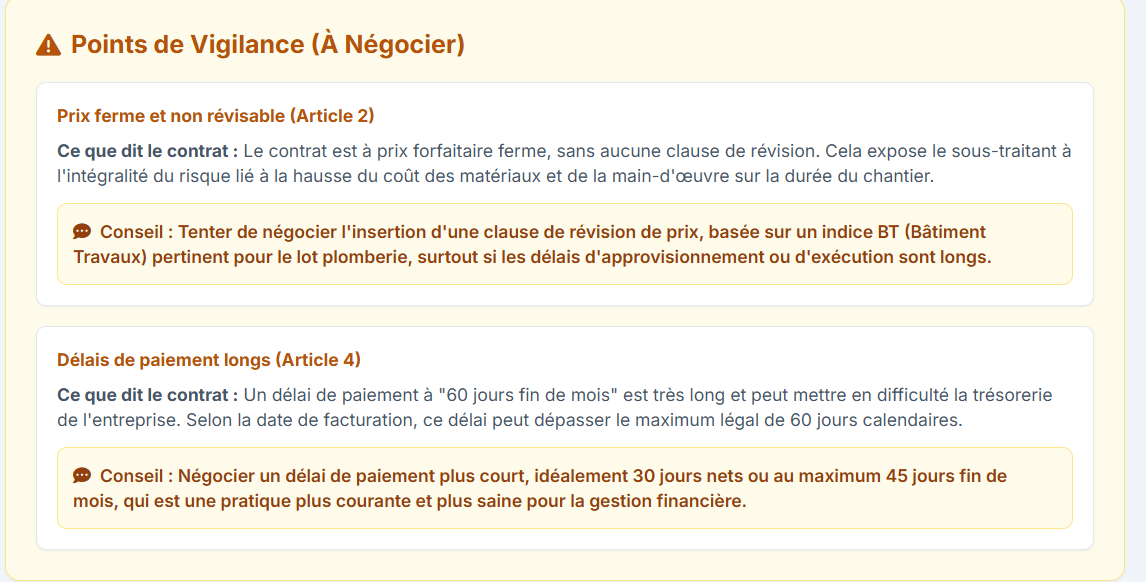
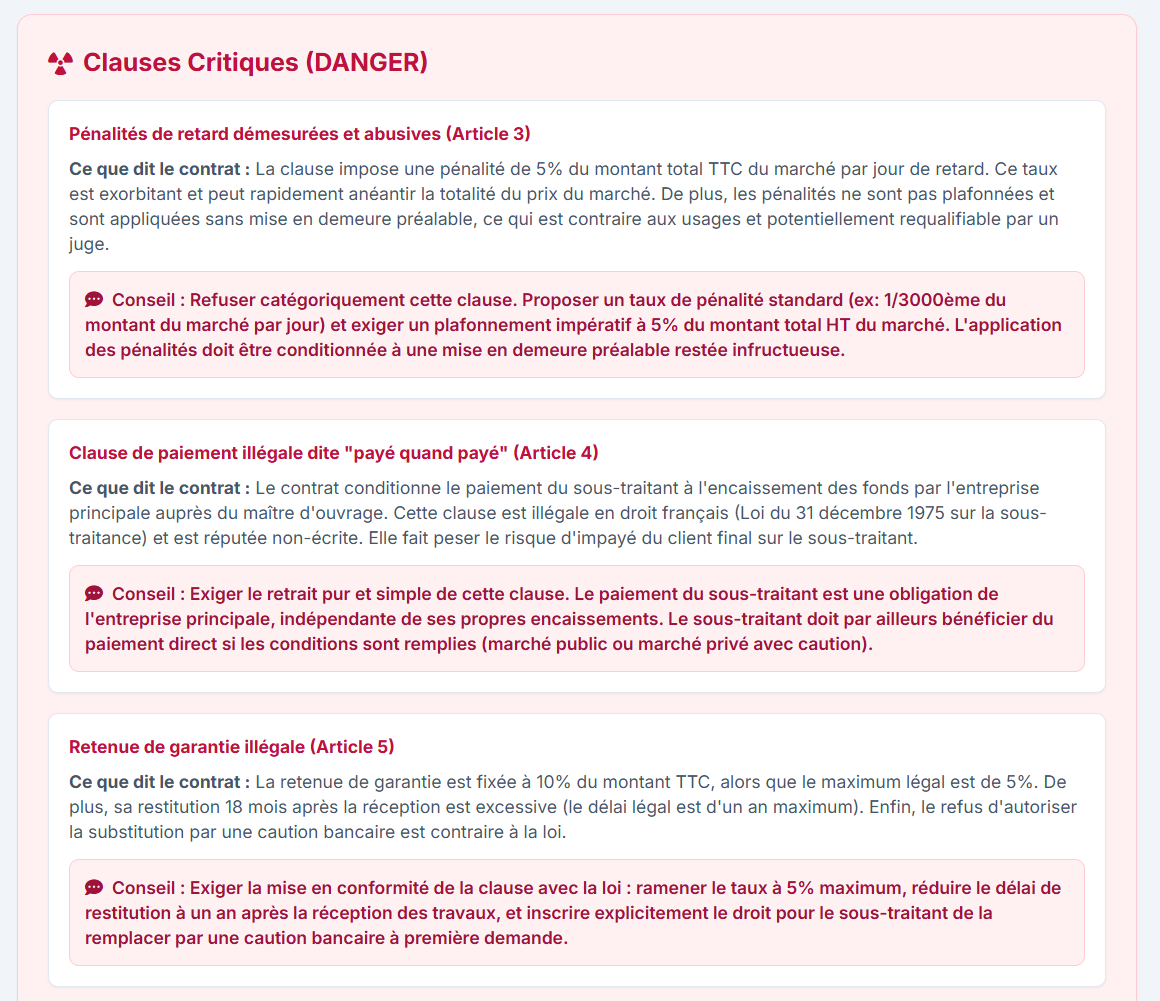
Klysia’s semantic analysis algorithms perform a full scan of sentence structures to isolate legal risk variables. The system does not simply search for keywords; it analyzes the legal intent of the clause. For example, a formulation stating that "the designer waives any claim for additional fees in the event of project duration extensions attributable to a third party" will be immediately flagged as a high-risk clause, generating an instant alert for the user.
3. Protecting Architect Copyright in the Era of BIM Models
The widespread adoption of BIM (Building Information Modeling) and the requirement to transmit digital models configured with complex Levels of Detail (LOD 300 or 400) intensify conflicts regarding the **intellectual property** of designers. Many contracts drafted by developers or authorities include clauses for the automatic and final transfer of adaptation rights on source files. This provision theoretically allows the client to reuse your graphic concepts or BIM object databases on other projects without your consent or additional fee payments.
Klysia’s Legal Scanner isolates these unfair transfer lines for economic and exploitation rights. The assistant instantly provides balanced substitute clauses, limiting the transfer to the strict needs of operating the built work, thereby protecting the independence and intellectual assets of your firm.