How to Optimize and Secure Tender Document Analysis with AI
1. The Invisible Traps of Written Documents in Public Works
Responding to public or private tenders in the Architecture, Engineering, and Construction (AEC) sector is a high-precision exercise. The administrative burden on design offices and general contractors has intensified with the growth of environmental, architectural, and safety regulations. Whether it’s a formal procurement or a negotiated procedure, the Tender Pack constitutes the strict legal framework to which the bid must conform.
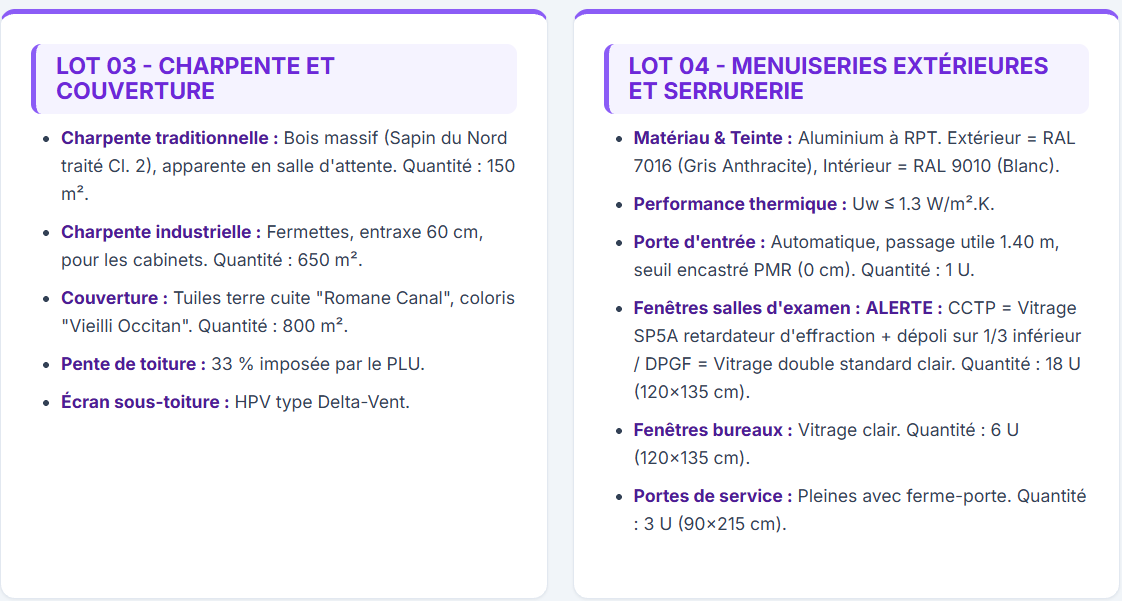
At the heart of this pack, the Technical Specifications compile the qualitative requirements of the client. The most frequent (and financially damaging) error is a fragmented reading of the document. Connection clauses, waste management obligations, or specific acoustic requirements are often hidden in transverse sub-chapters, escaping the notice of estimators when establishing fixed prices.
2. Automating Spec/BoQ Cross-Referencing: Ending Under-Estimation
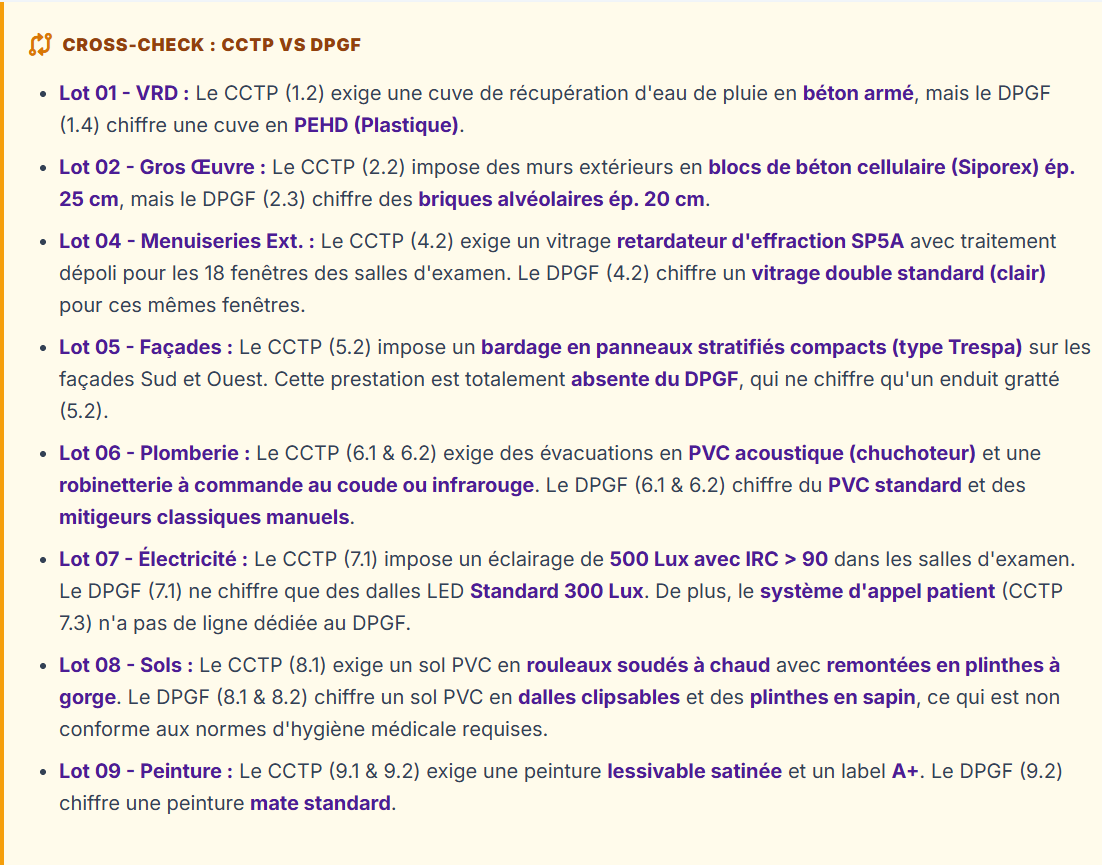
The Bill of Quantities (BoQ) or Schedule of Values (SoV) serves as the priced support to formalize the company's financial commitment. Unfortunately, there are frequently semantic shifts or blatant omissions between the services listed in the technical description and the numerical entry lines provided in the pricing template.
Using AI-assisted technical text processing software like Klysia allows for the automation of this regulatory and financial audit. By simultaneously indexing the vocabulary of the Specs and the BoQ, our algorithm instantly detects discrepancies. If the document requires reinforced acoustic insulation under the screed but no corresponding line appears in the financial framework, the system triggers an alert. This allows you to submit RFI (Requests for Information) or integrate the real cost into your general unit prices.
3. Maximizing Your Technical Methodology Score with Semantic Processing
In the awarding of public design or construction contracts, the technical value of the offer generally represents 40% to 60% of the overall score, sometimes outweighing the financial criteria. This value is evaluated through the analysis of your Technical Methodology Statement. To win the contract, your methodology must not be a generic brochure. It must respond point-by-point to the scoring criteria and site-specific constraints described in the tender documents.
Klysia's AI does more than analyze the file; it extracts the exact semantic structure expected by the buyer. By isolating logistics constraints (urban site access, delivery windows, occupied site maintenance) and environmental goals (carbon reduction targets), the tool provides the ideal roadmap for writing a bespoke methodology. Your offer gains relevance, captures the attention of tender boards, and maximizes your technical score.