BIM Data Management in Architecture: Decoding the Contractual Protocol with AI
1. The BIM Execution Plan (BEP), the Legal and Technical Framework for Collaborative Modeling
In a construction project utilizing BIM (Building Information Modeling) methodology, the BIM Execution Plan (BEP) or BIM Protocol acts as the supreme contractual document governing digital model production. Drafted by the BIM Manager or the Client, this document sets the organizational protocol, collaborative processes, Common Data Environment (CDE), and the data taxonomy that every design team member (architect, structural engineer, MEP engineer, surveyor) must strictly follow.
For an architecture firm, manual analysis of these dense protocols is a time-consuming task. Charters compile sophisticated requirements for formats, folder structures, file naming conventions, and geometric property assignments. Misinterpreting these clauses leads to non-compliance during model federation, manifesting as complex BCF (BIM Collaboration Format) coordination issues during technical synthesis.
2. Automated Extraction of Structural Data (LOD / LOI) via Semantic Processing
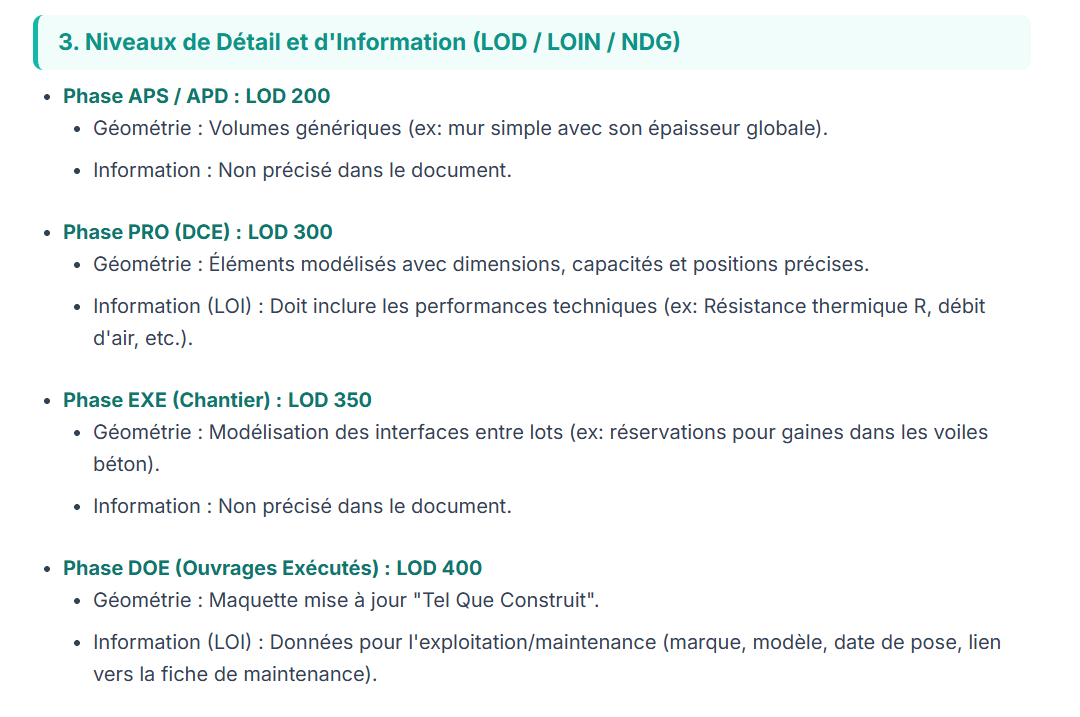
The core of a BIM charter lies in its modeling objective matrix, expressed through LOD (Level of Development) for 3D geometry and LOI (Level of Information) for the semantic database. These indicators set the precision threshold expected for each object category (walls, columns, windows, MEP equipment) according to project milestones (Concept, SD, DD, CD).
Using a vertical AI tool allows for the transcription of these massive tables into operational action plans. Klysia’s semantic processing models isolate the responsibility lines assigned to your trade. If the BEP dictates that partition walls in the DD phase must include acoustic performance properties (LOI indicator), the assistant extracts and highlights it. Your modelers can then configure their Revit or Archicad shared parameters accurately, eliminating risks of fruitless over-modeling or incomplete deliverables.
3. Ensuring openBIM Interoperability and IFC Exchange Compliance
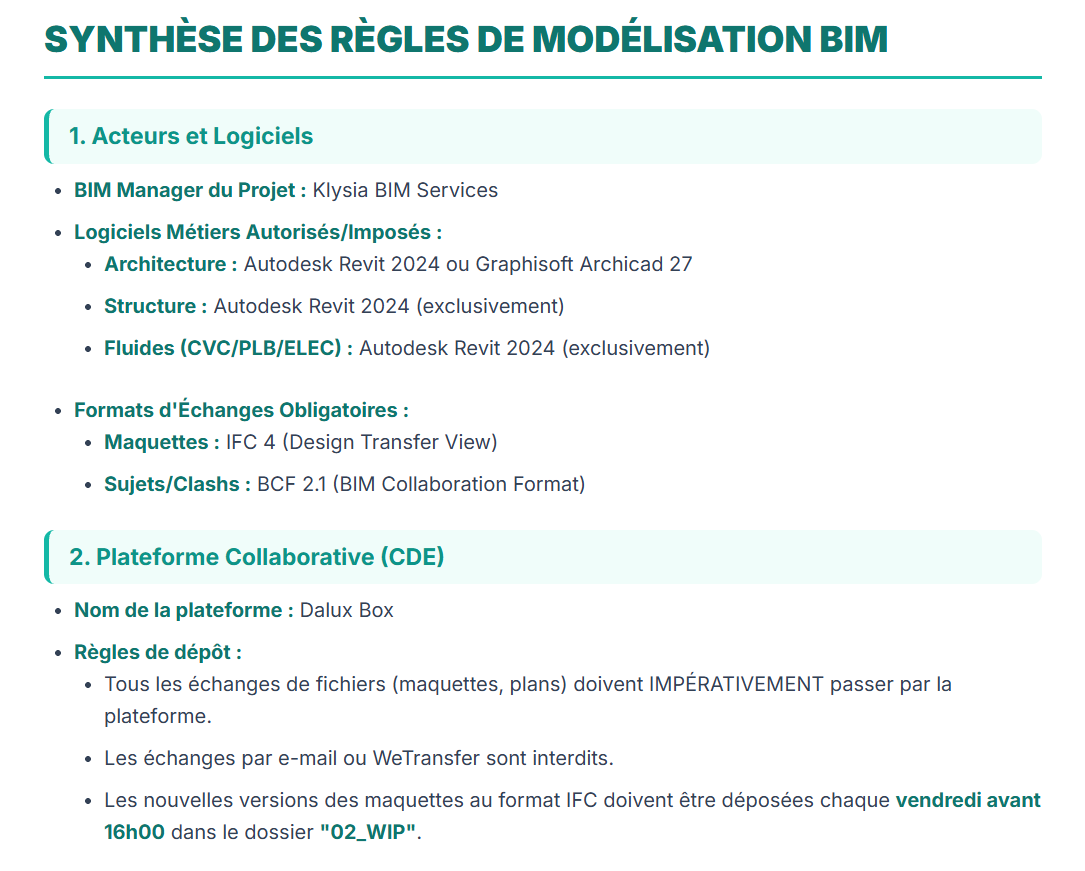
Interoperability between the design team's various CAD software relies on the **IFC (Industry Foundation Classes)** standardized exchange format, developed by buildingSMART. The BIM Execution Plan imperatively specifies the data schema version to apply (IFC 2x3 Coordination View, IFC 4 Design Transfer View) as well as file naming structures to ensure automated integration into the federated model.
With Klysia's AI scanner, extraction of these critical variables is instantaneous. The tool identifies software constraints, isolates required export configurations, and highlights topographic requirements (project base point and survey point coordinates). Your teams initialize their graphic files on certified technical foundations from day one, facilitating subsequent regulatory checks performed in our architectural plan audit module.